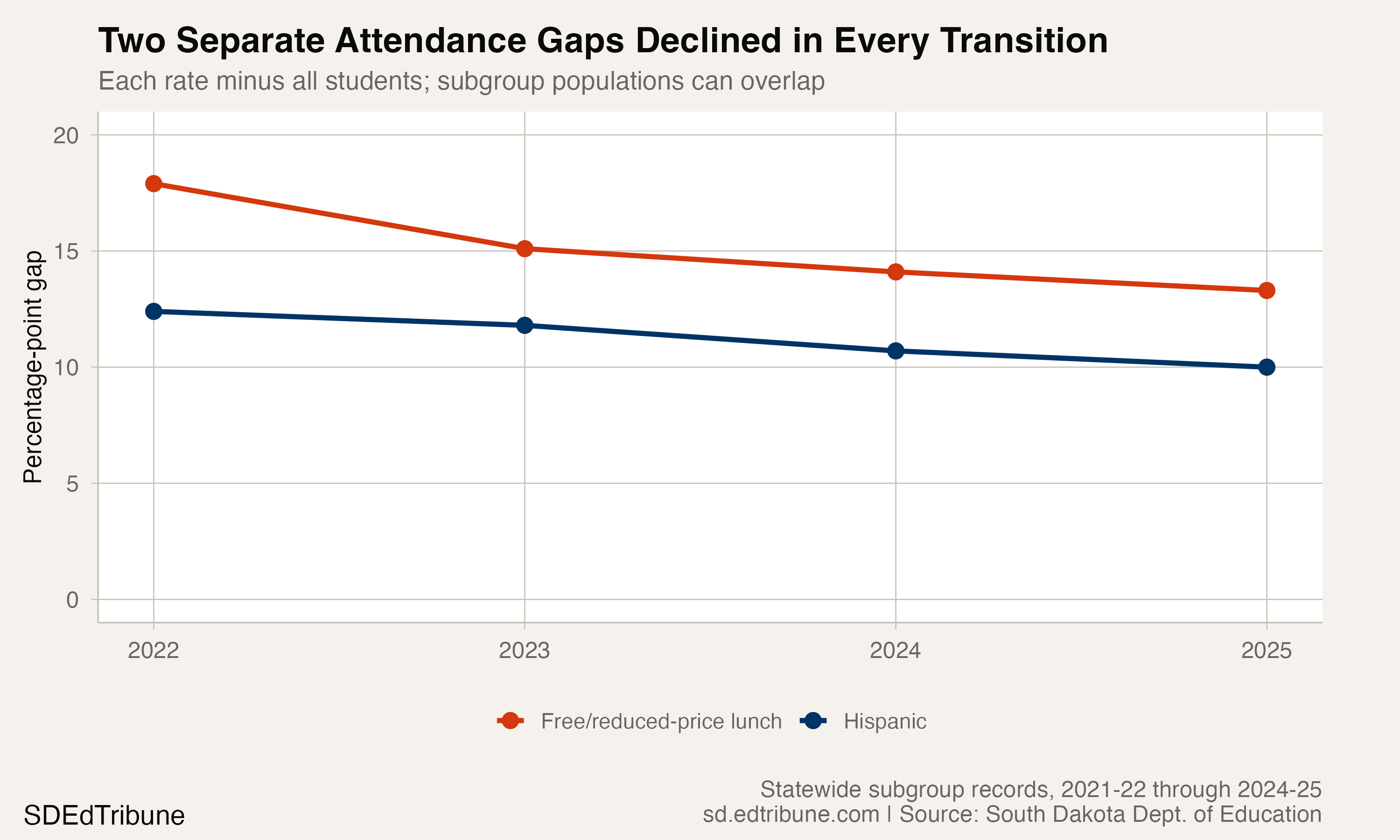
South Dakota's chronic-absence gaps for the free/reduced-price lunch and Hispanic subgroups narrowed in every annual transition from 2022 through 2025.
The two patterns are separate comparisons with the statewide all-students rate. They should not be added together: lunch-program status and race are different classifications, and the populations can overlap.
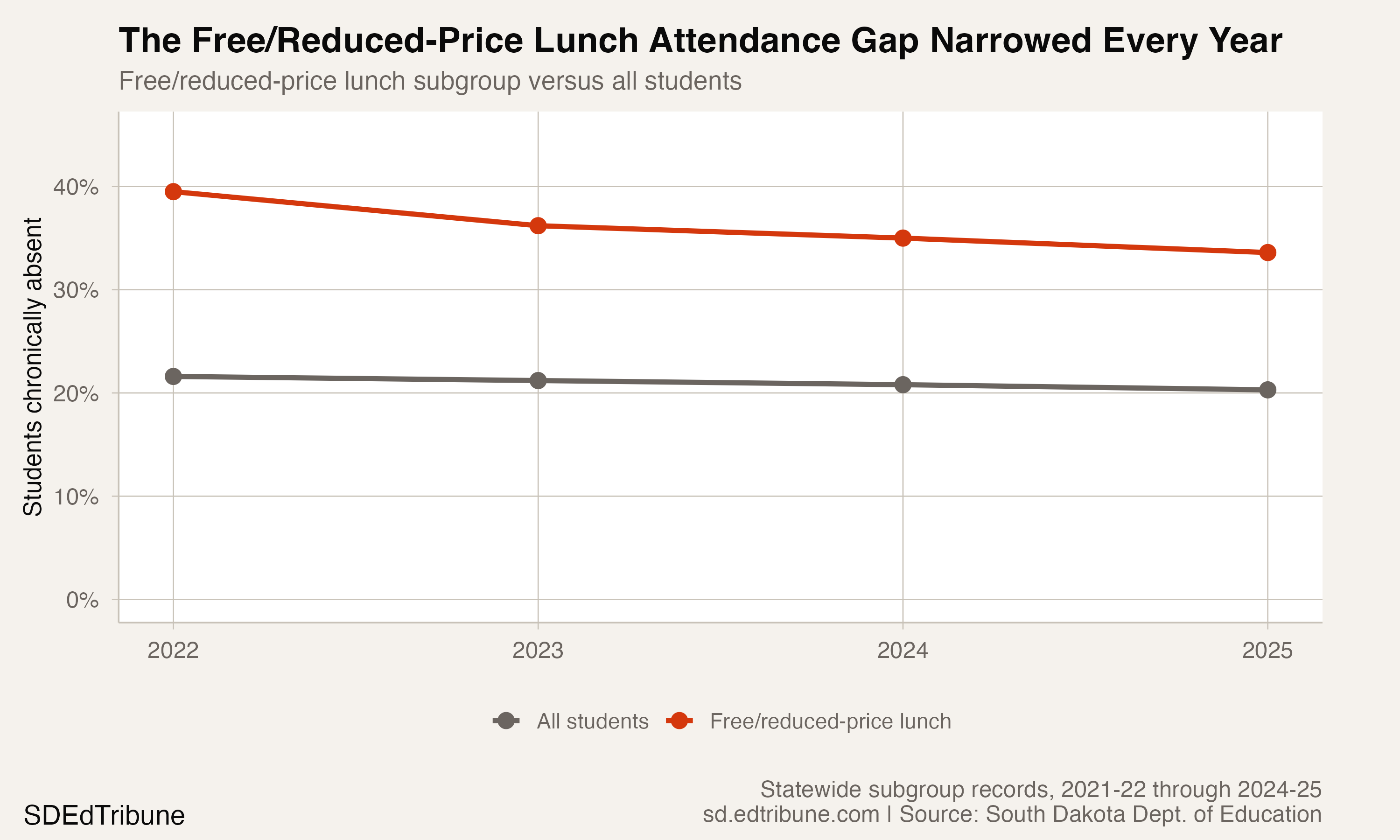
The poverty-status gap shrank by about one-quarter
The chronic-absence rate for students in the free/reduced-price lunch subgroup fell from 39.5% in 2022 to 36.2% in 2023, 35.0% in 2024 and 33.6% in 2025. Each move was lower than the year before.
Over the same period, South Dakota's all-students rate moved from 21.6% to 20.3%. The gap between the two rates narrowed from 17.9 to 13.3 percentage points. That 4.6-point reduction equaled 25.7% of the starting gap.
The rate decline did not mean fewer students in the reported category were chronically absent. The free/reduced-price lunch enrollment denominator grew by 10,387 students, or 22.9%, while its chronic count increased by 812. The rate fell because the denominator grew faster than the count.
South Dakota's 2025 accountability manual says economically disadvantaged membership can reflect free- or reduced-price meal status or attendance at a qualifying school. That makes changes in the classified population relevant context, though the aggregate file cannot show how much classification changes shaped the trend.
In response to questions from The SDEdTribune, Jaeya Jones, public information officer for the South Dakota Department of Education, wrote: "Attendance is a localized, multi-faceted indicator." Districts identified for school improvement and high levels of absenteeism have focused on attendance, she wrote, and she pointed to interventions across districts as a possible explanation for improvement. Her account adds context to the statewide pattern; the aggregate records cannot measure the effects of individual districts' interventions.
The Hispanic gap also declined three times
The Hispanic chronic-absence rate fell from 34.0% to 30.3%, a 3.7-point reduction. Its gap with the all-students rate narrowed from 12.4 points in 2022 to 11.8, 10.7 and 10.0 points in the next three years.
Hispanic enrollment rose by 2,162 students during the panel, while the number classified as chronically absent rose by 232. As with the poverty-status comparison, the outcome is a falling rate alongside a rising count.
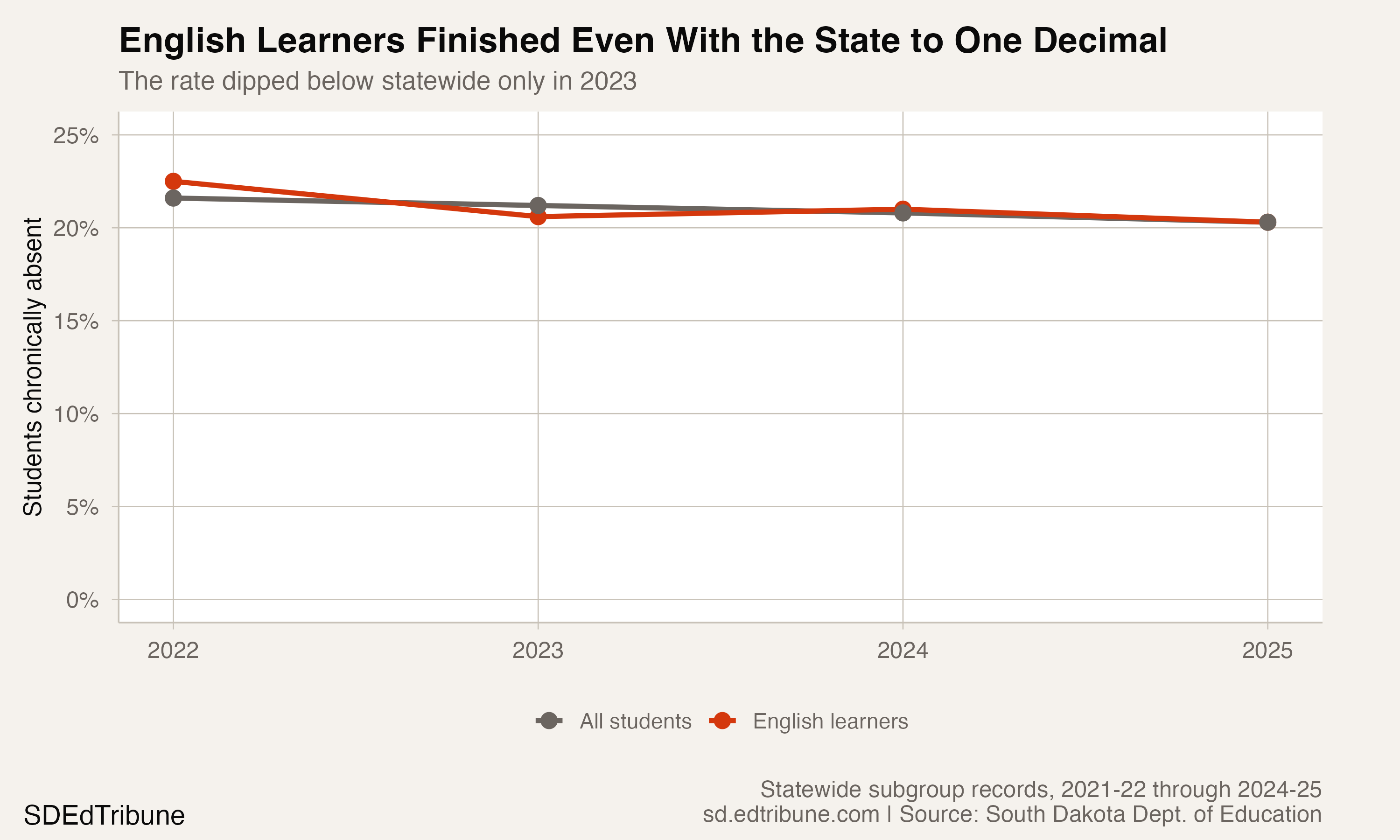
English learners ended near statewide parity
English learners followed a less steady path. Their chronic-absence rates were 22.5%, 20.6%, 21.0% and 20.3%. The corresponding statewide rates were 21.6%, 21.2%, 20.8% and 20.3%.
That put English learners below the statewide rate only in 2023 and even with it to one decimal place in 2025. Their reported enrollment grew by 2,819 students, or 38.9%, and their chronic count grew by 412.
The same state manual applies specific status rules to English learner attendance reporting. Population change, classification, program reach, reporting practice and community conditions could all overlap with the rate changes. Statewide aggregates identify the pattern but cannot isolate its cause.
Jones also cautioned that a school turnaround takes more than improved attendance. She wrote: "In general, the data that the Department collects and reports on is descriptive, and we encourage schools to dive deeply into their data and evidence-based practices to help improve attendance rates in their buildings." A narrowing statewide gap identifies a pattern worth investigating locally; it does not establish what worked in a particular building.
Figures come from the South Dakota Department of Education's statewide chronic-absence records for 2022 through 2025, published on its annual Report Card page. Jones supplied the department's context in a written response.
Detailed code that reproduces the analysis and figures in this article is available exclusively to EdTribune subscribers.
Discussion
Sign in to join the discussion.
Loading comments...