Absence
Eagle Butte's Attendance Rate Made South Dakota's Sharpest One-Year Shift
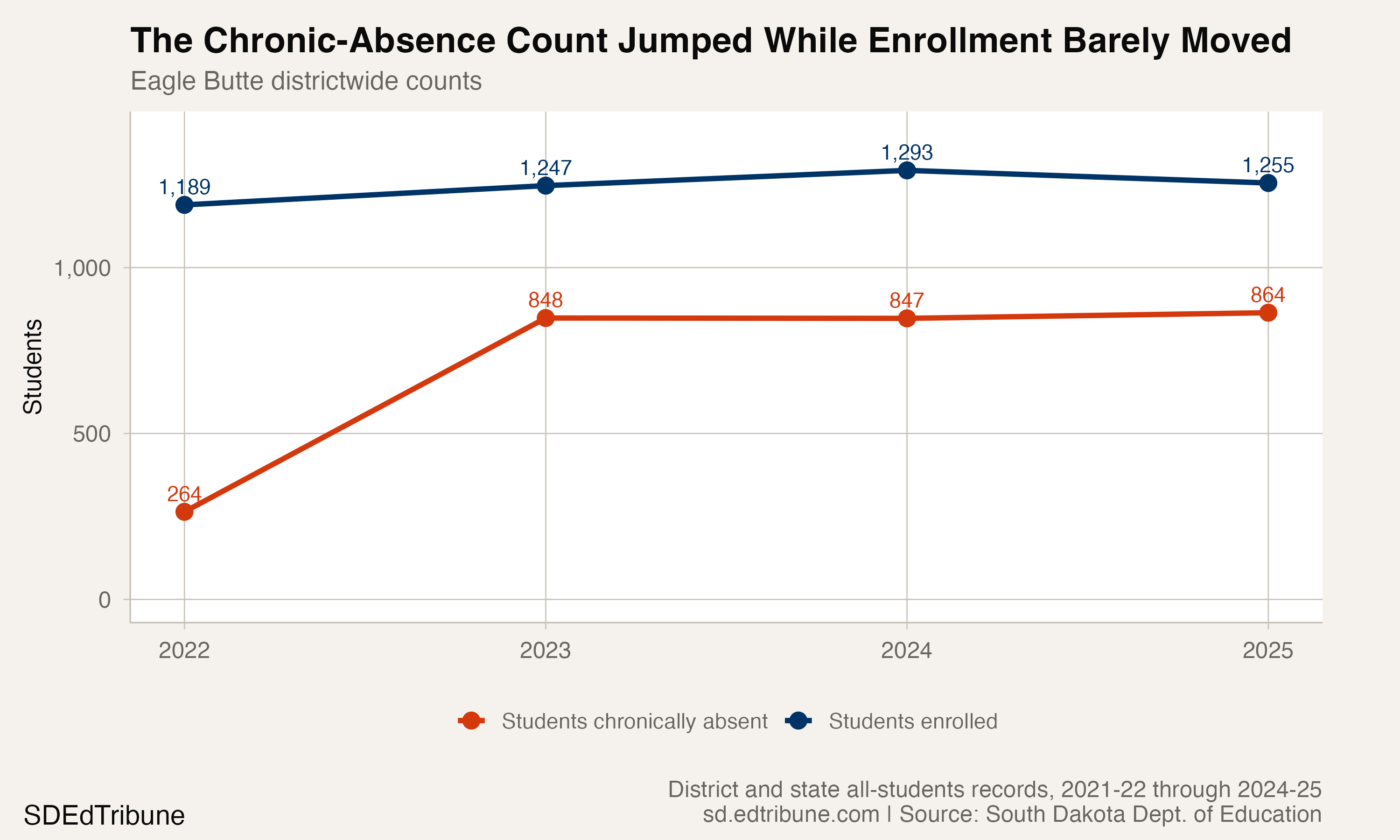
Eagle Butte's chronic-absence rate rose 45.8 points in one year and remained between 65.5% and 68.8% for the next three reporting years.
Data-Driven Education Journalism for the Mount Rushmore State
Education News & Data
Local education reporting from every corner of South Dakota, grounded in South Dakota Department of Education data.
Oglala Lakota County improved, but reservation-community systems still held five of South Dakota's six highest district chronic-absence rates in 2025.
Rapid City's chronic-absence rate ended 2025 at 31.3%, 6.7 points above Sioux Falls after the gap narrowed a year earlier.
Attendance improved for Native students and students identified as homeless, but South Dakota's subgroup gaps remained wide in 2025.
South Dakota's female chronic-absence rate exceeded its male rate in all four years, while the students-with-disabilities gap reversed course in 2025.
Eagle Butte's chronic-absence rate rose 45.8 points in one year and remained between 65.5% and 68.8% for the next three reporting years.
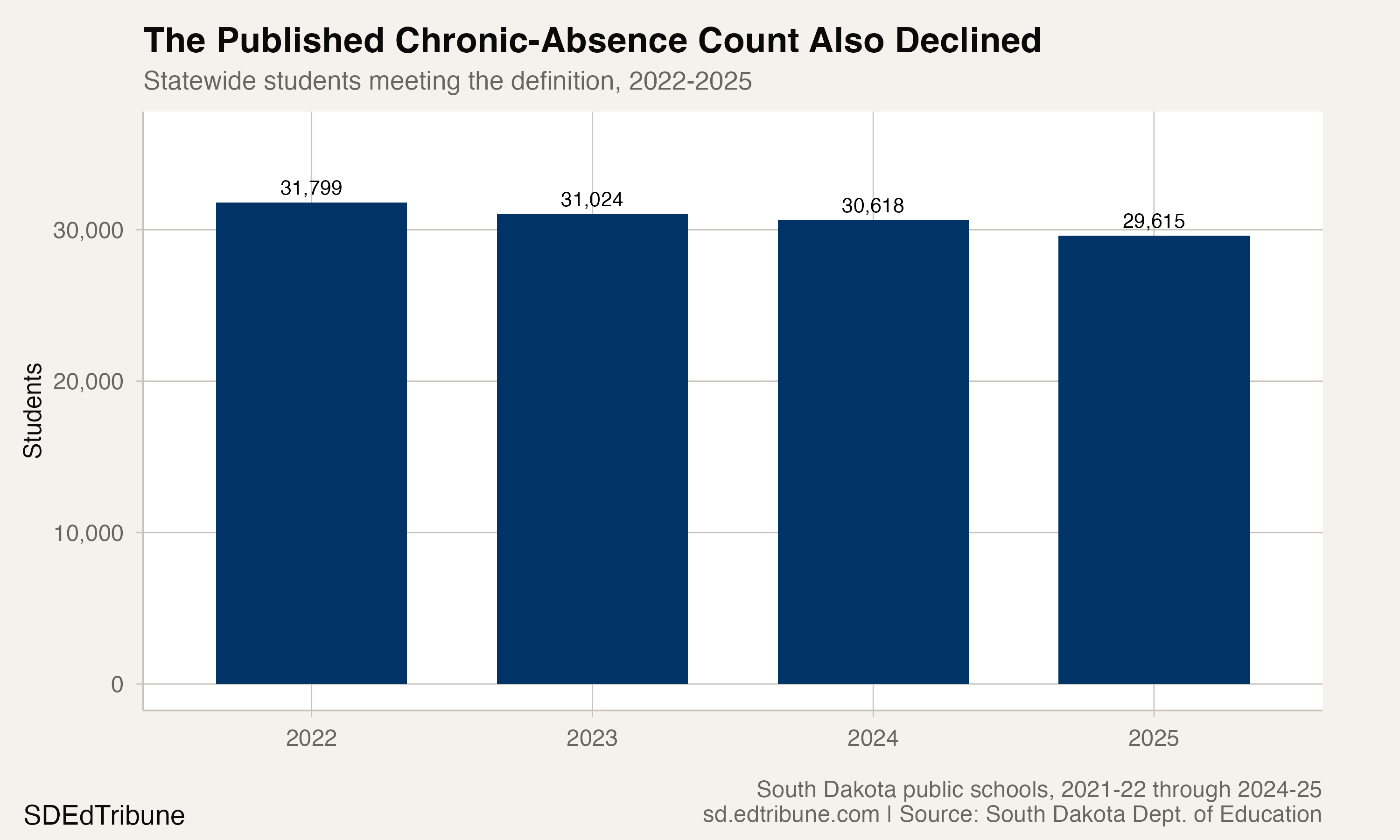
South Dakota's chronic-absence rate improved for three consecutive years, yet nearly one in five students still met the definition in 2025.
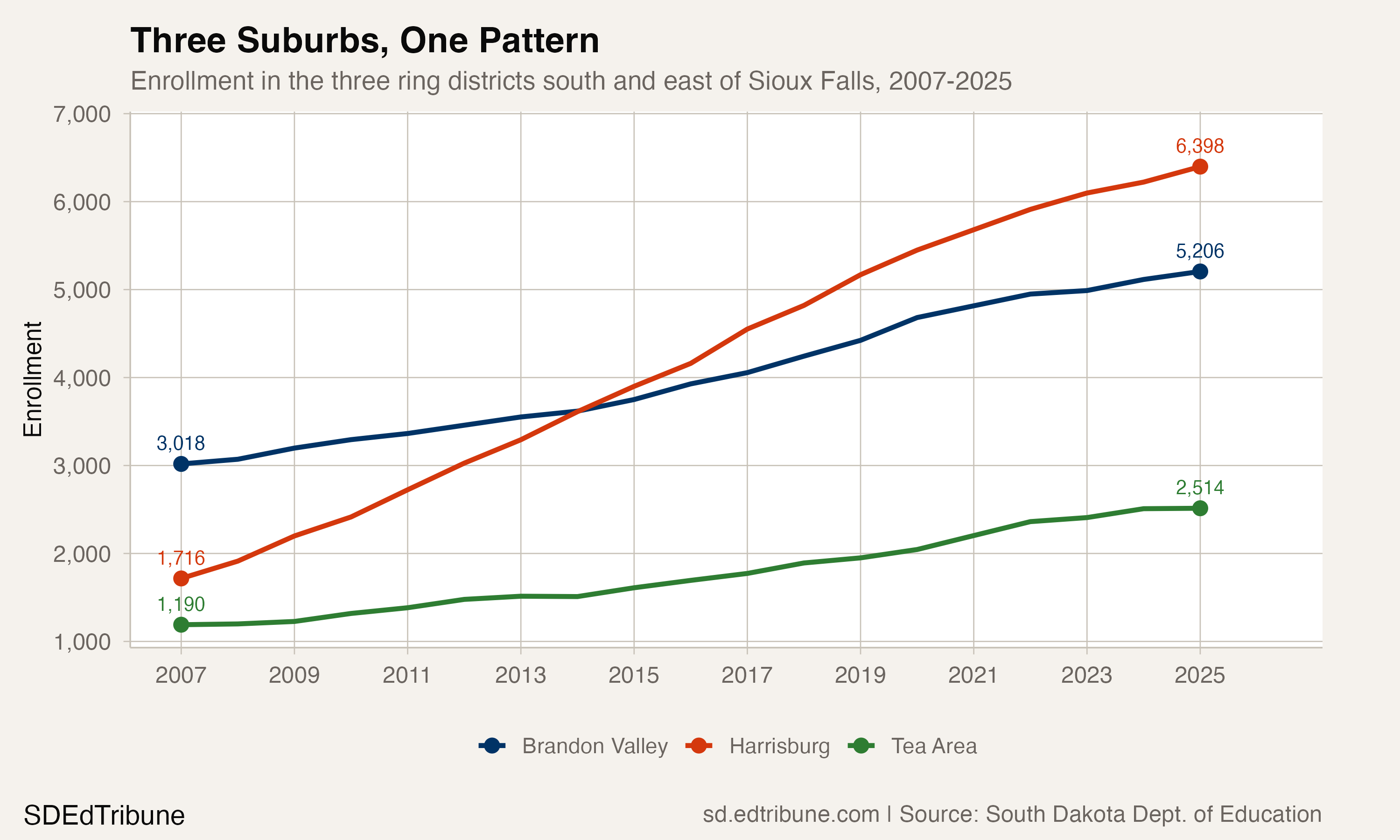
Three ring districts south of Sioux Falls added 8,194 students since 2007, doubling their state enrollment share while the core plateaus.
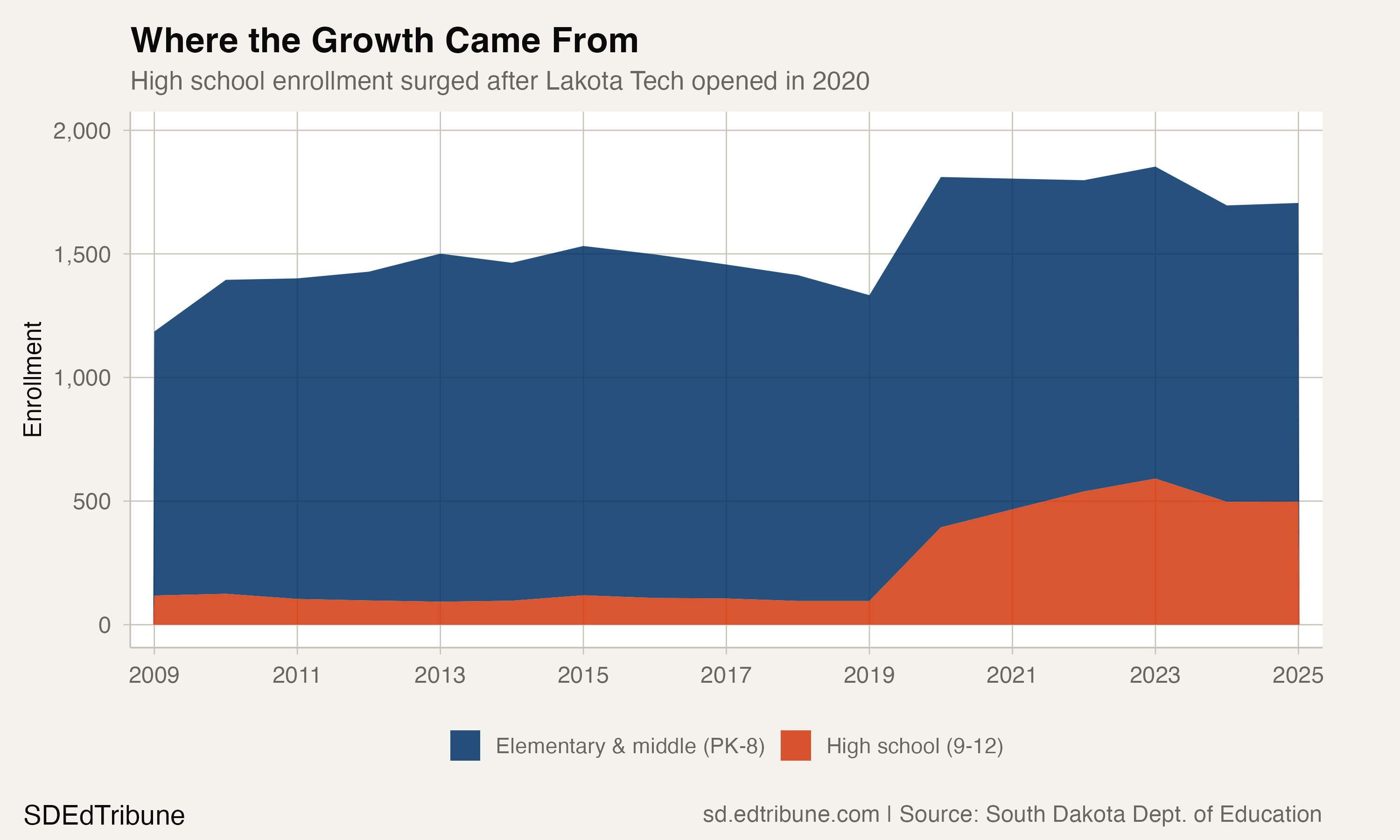
Oglala Lakota County School District grew 49.4% since 2007, the 10th-fastest rate in South Dakota. Most of that growth came from opening Lakota Tech, the first CTE high school on any reservation.
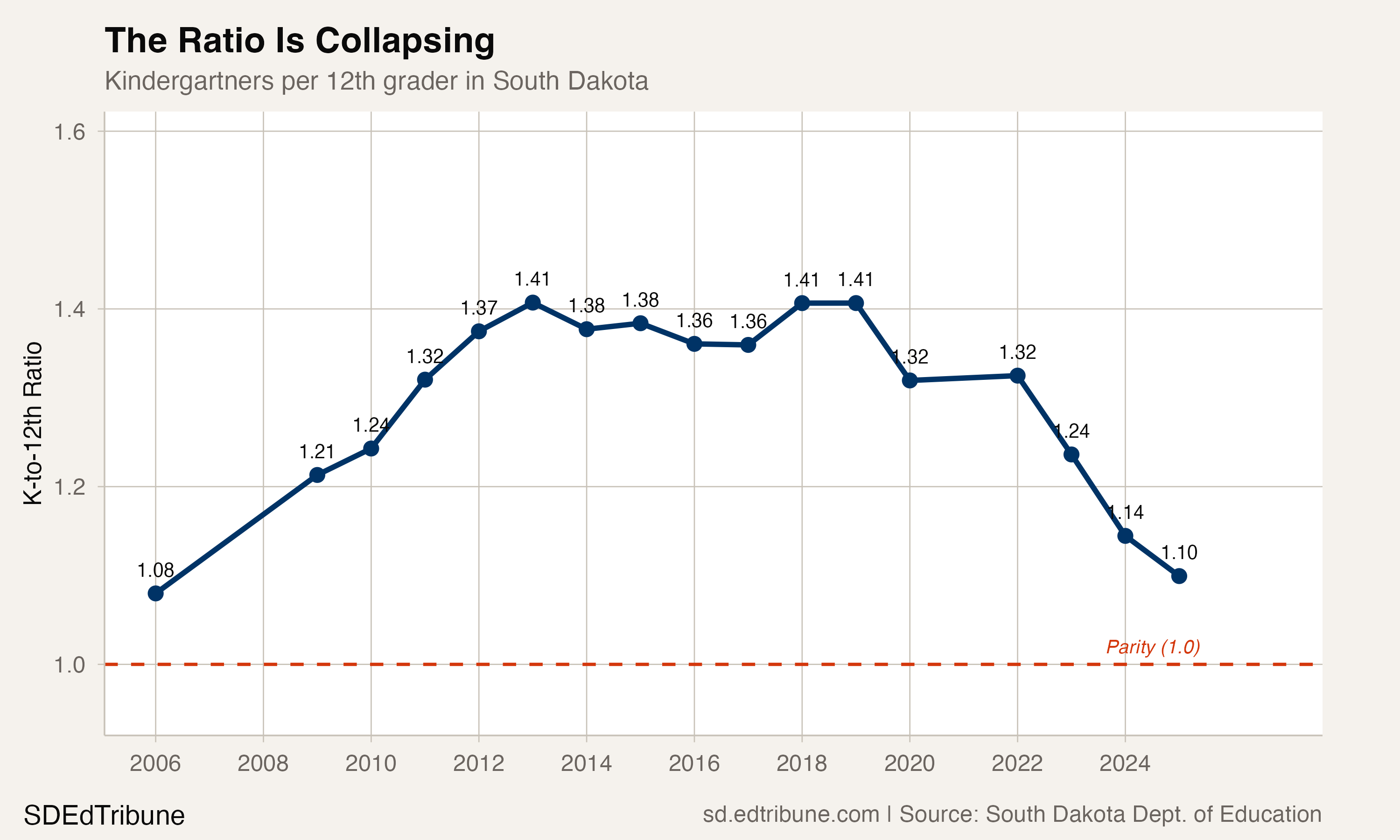
The ratio of kindergartners to 12th graders has collapsed from 1.41 to 1.10 in a decade, signaling years of accelerating enrollment decline ahead.
South Dakota's Native American enrollment barely moved in 17 years while Hispanic numbers nearly quadrupled, shrinking the Native share from the inside out.
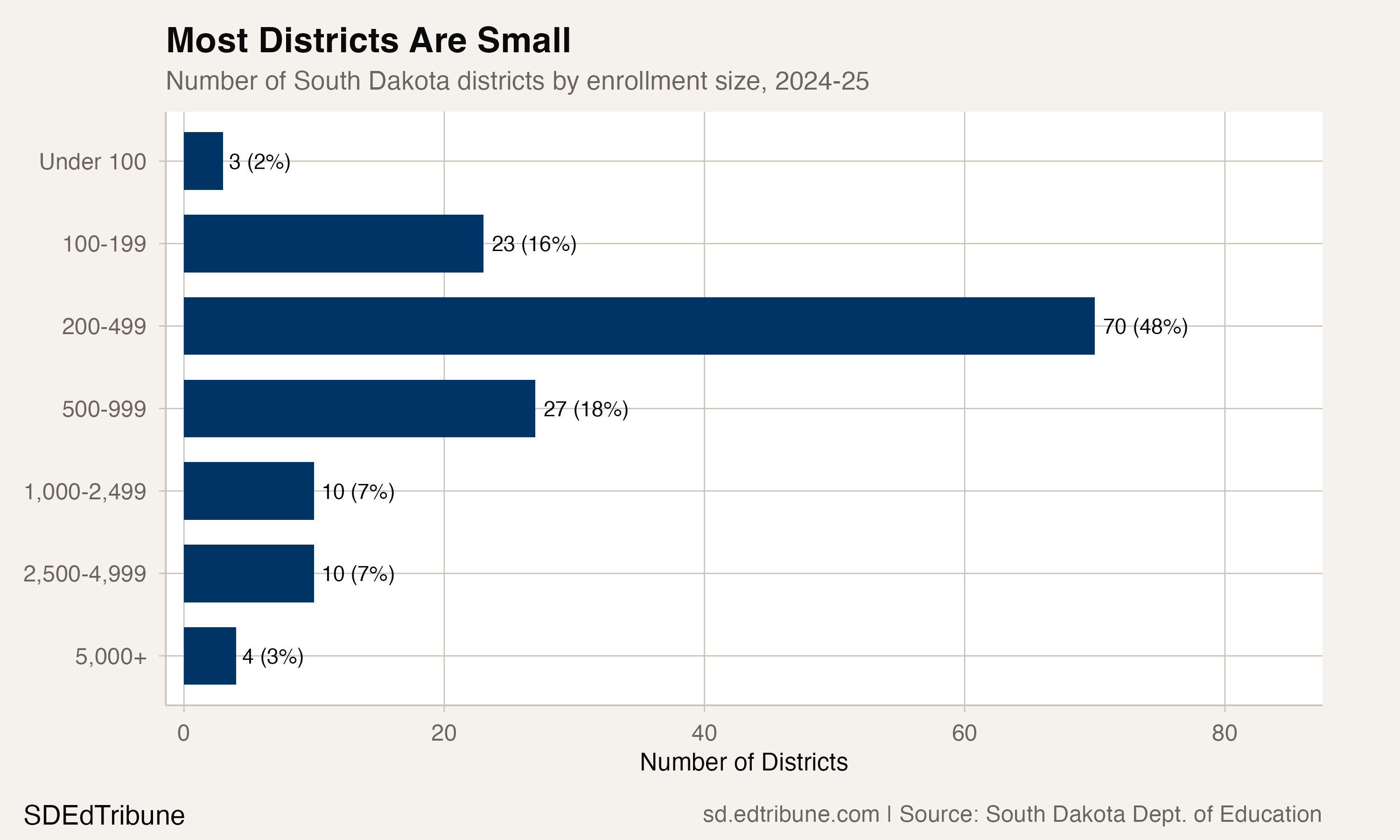
South Dakota's 148 school districts range from 16 to 25,060 students. The bottom half hold just 12% of the state's enrollment.
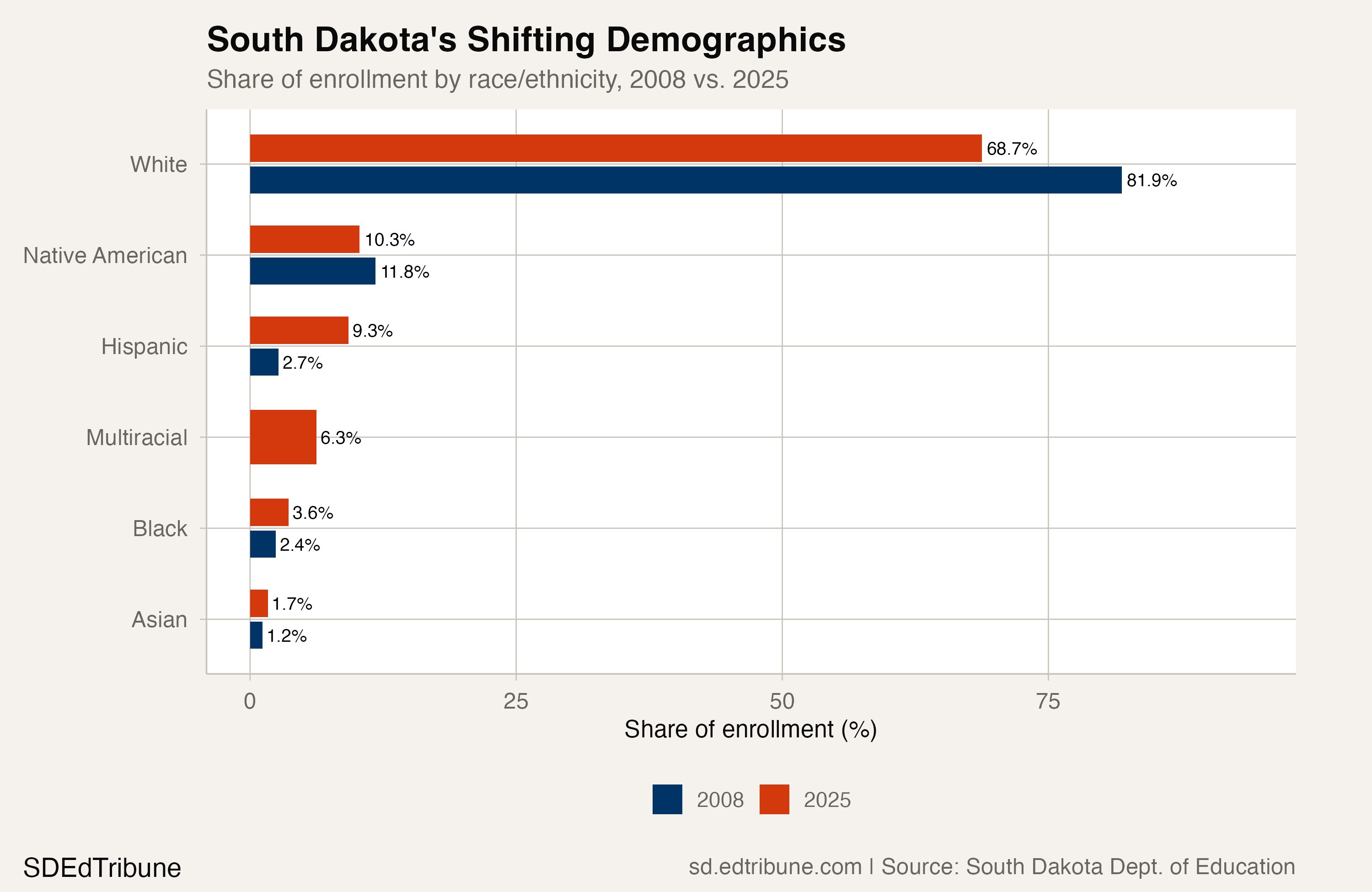
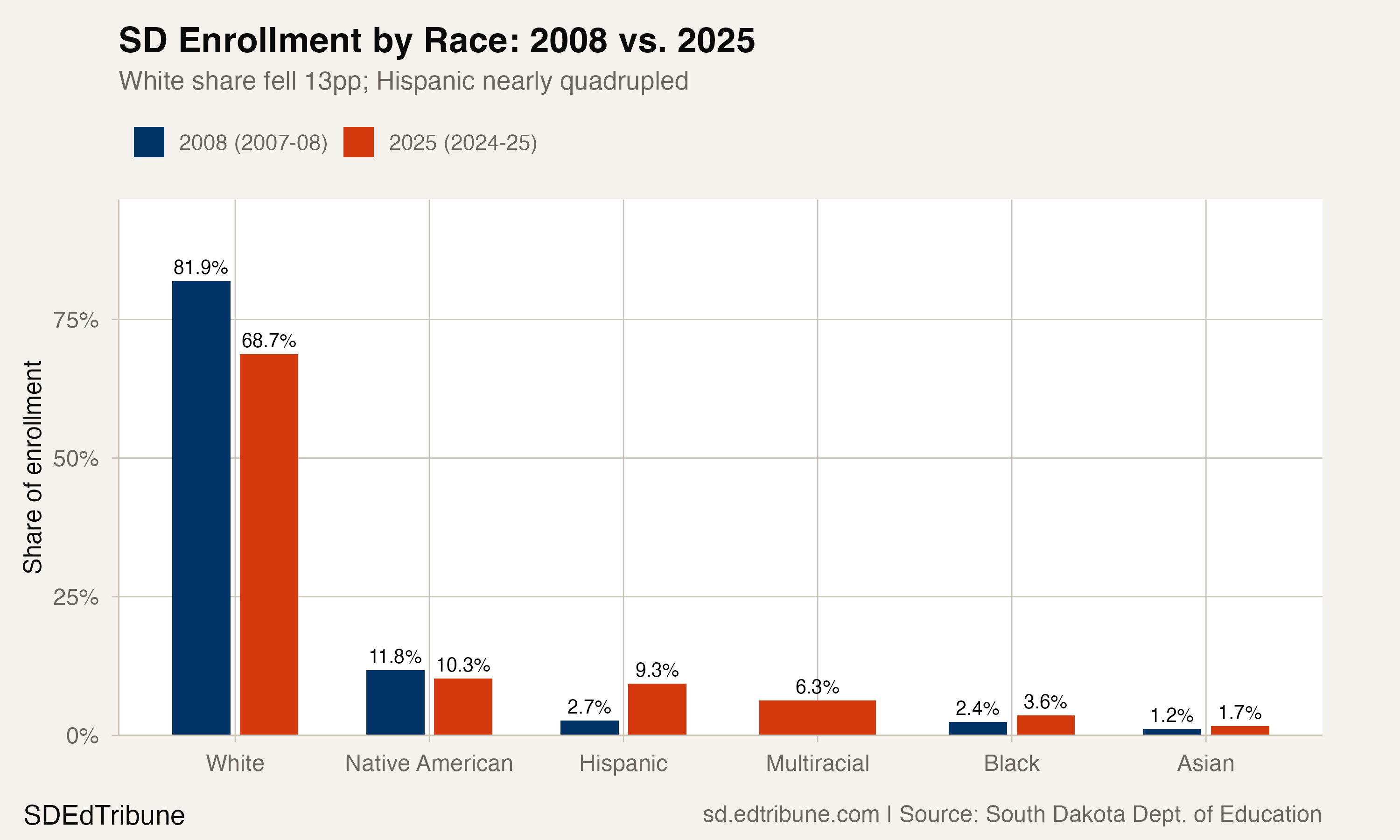
White enrollment fell from 82% to 69% as Hispanic students nearly quadrupled and multiracial identification surged across the state.
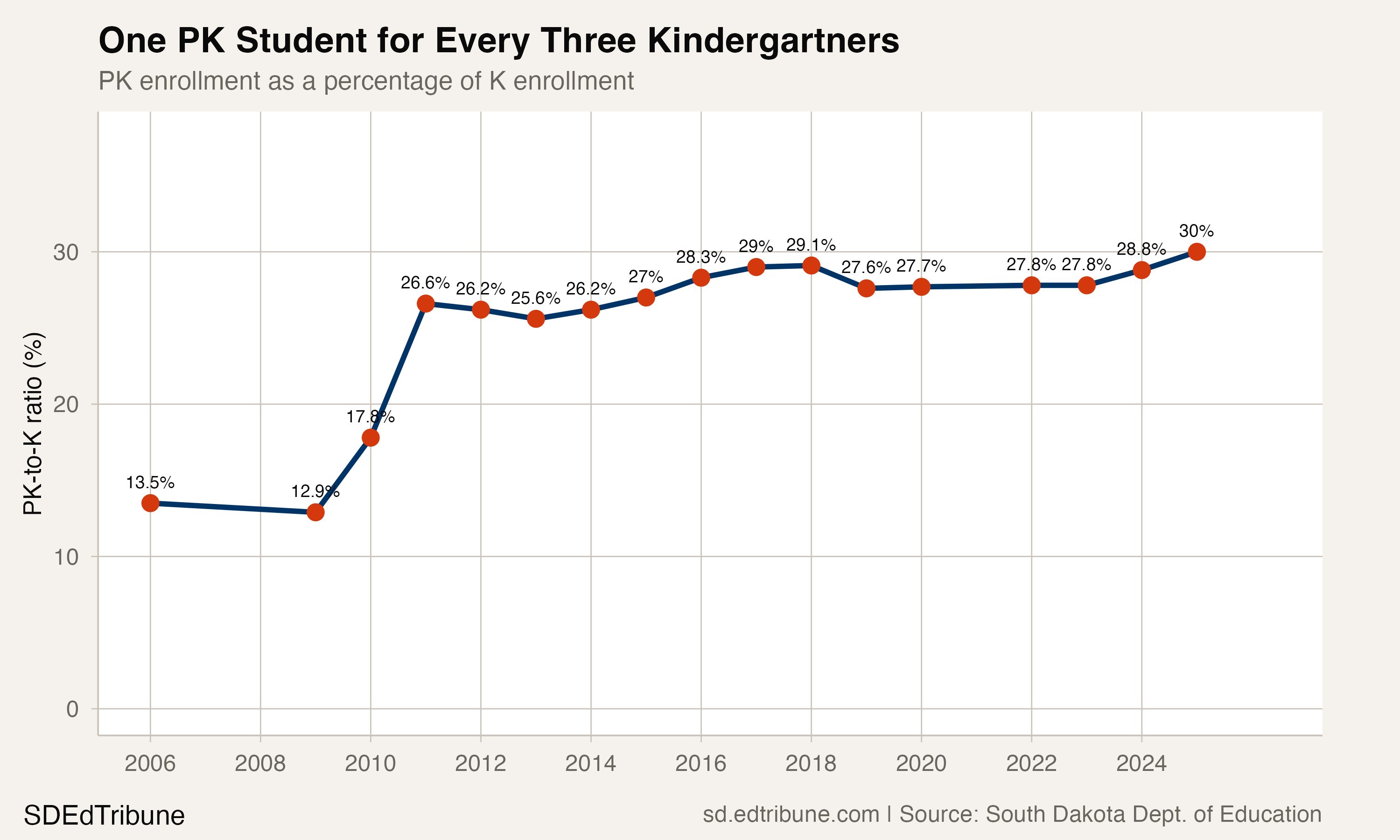
Pre-K enrollment tripled from 1,280 to 3,284 over two decades, but most of the growth traces to a 2010 reporting rule change, not new classrooms.
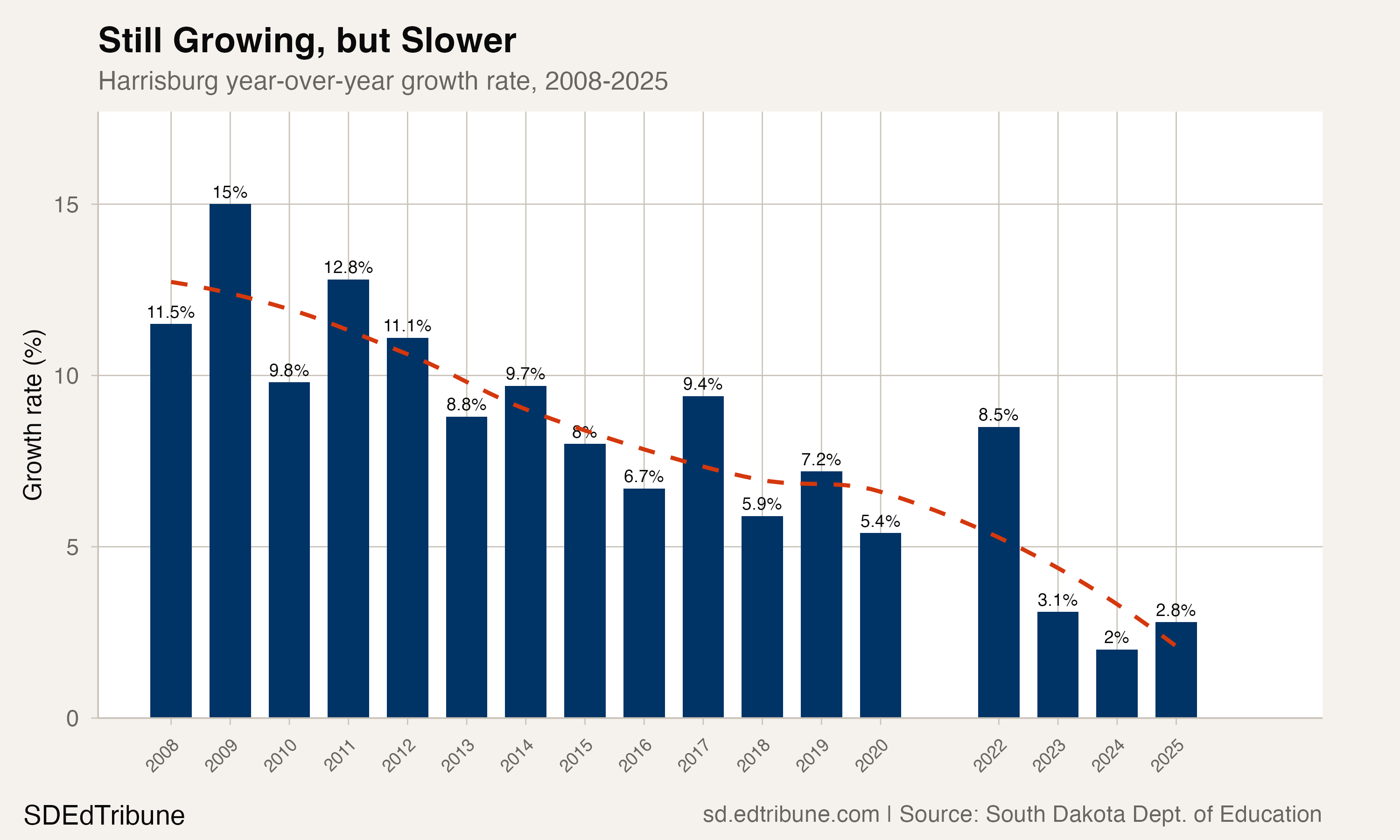
South Dakota's third-largest district added 4,682 students since 2007 without a single down year, but the growth rate is falling fast.
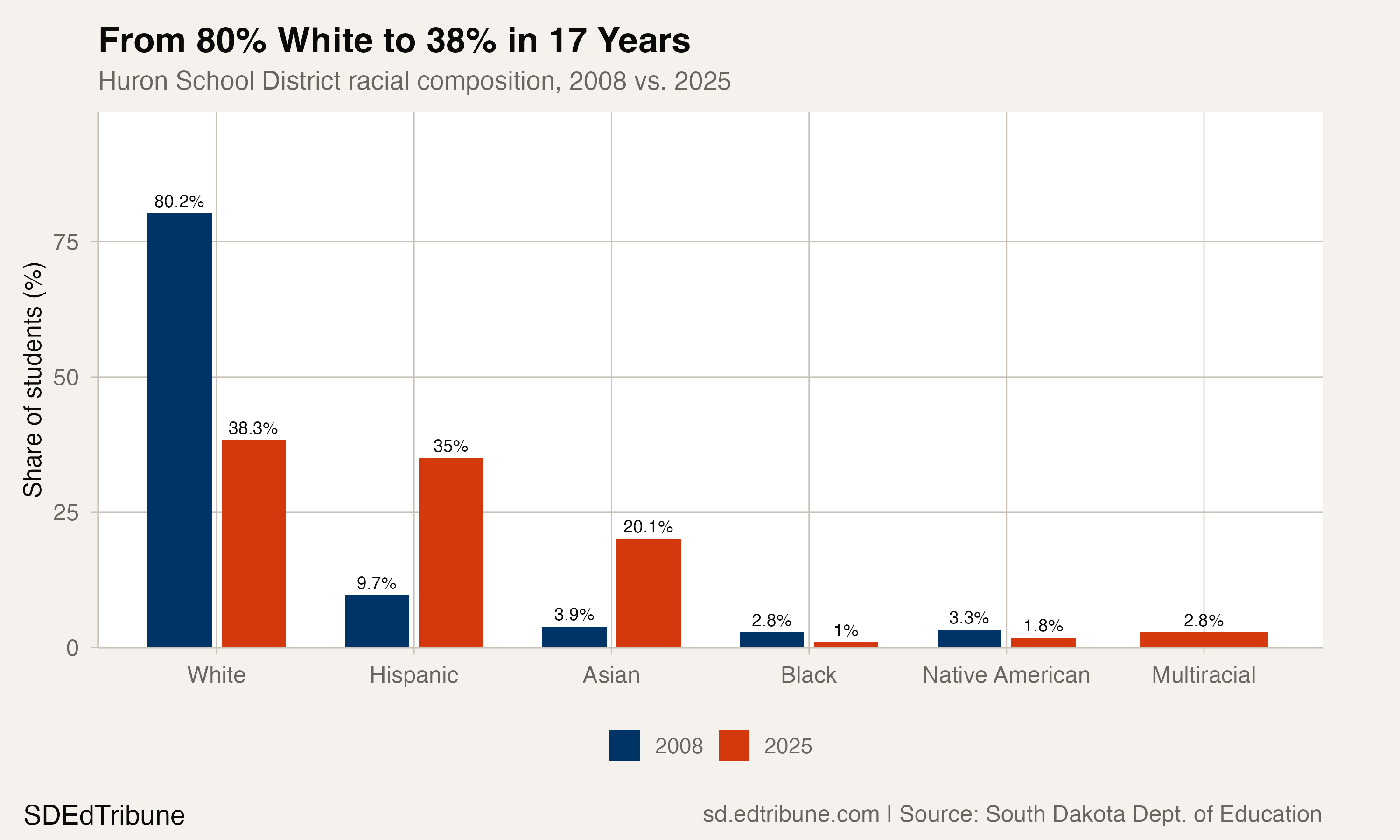
Karen refugees and Hispanic workers made Huron South Dakota's most diverse district. Enrollment up 41.6% as white share fell from 80% to 38%.